
Defining Verification Frameworks for AI Responses
I led the design of the system that defines how AI responses are verified and explained across Salesforce’s Lightning Platform.
This system standardizes how AI outputs are presented, including citations and source attribution, making it foundational across product lines and enabling teams to adopt it at scale.
It establishes a consistent interaction model for AI, ensuring users can understand where answers come from and how reliable they are.
Role
Defined the interaction model for agentic experiences across platform and product surfaces
Established system-level patterns in a zero-PRD, highly ambiguous space
Drove cross-org decisions across Design, Eng, and PM to align on a unified approach
Shaped feasibility and architecture in partnership with engineering (not just design)
Translated strategy into reusable, production-aligned patterns adopted across teams
Set quality bar, governance, and rollout strategy for scalable adoption
Managed stakeholders and expectations at platform + product levels
Challenges
Existing approaches to AI citations broke down at both system and experience levels.
Scaling
Built for a single platform (Lightning), citations did not scale to multi-cloud AI
No shared interaction contract across AI products
Teams created fragmented, product-specific solutions
Legal requirements for source transparency lacked a system-level solution
Experience
Inline citations disrupted the natural reading flow
High citation density reduced comprehension
Expanding source lists pushed primary content off-screen
Low engagement with full source views revealed a breakdown in usability
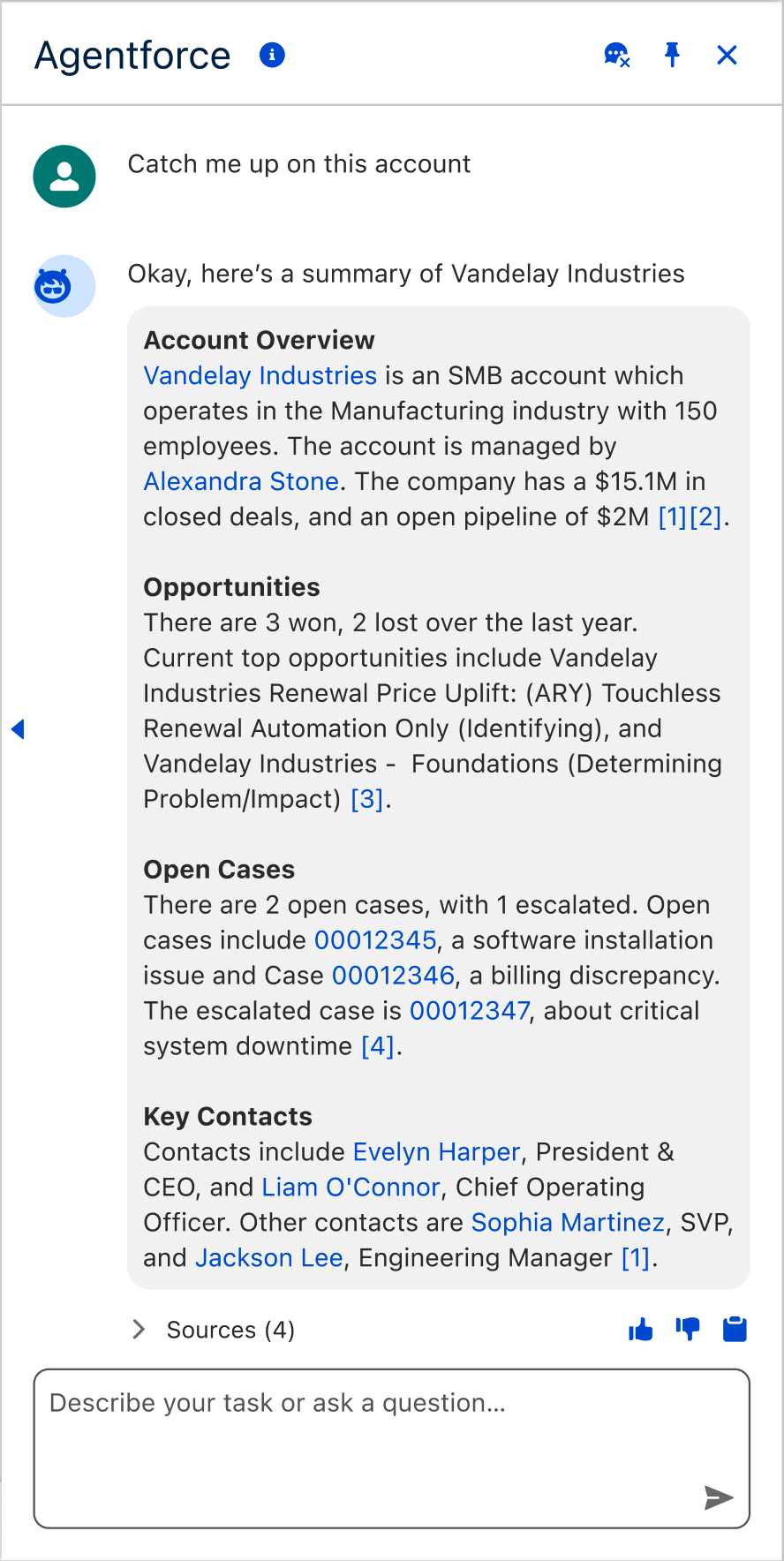
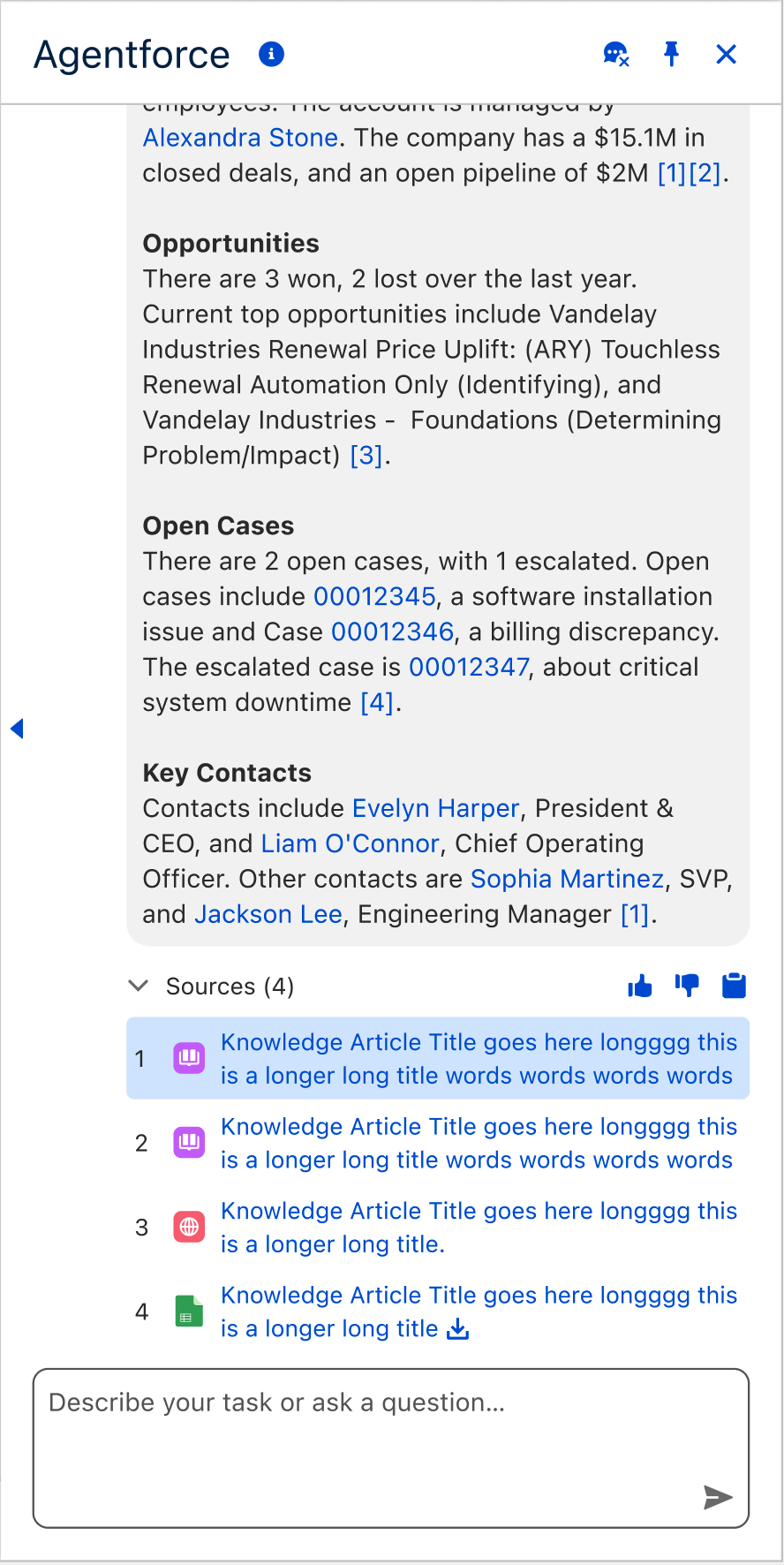
Strategies
1. Moved citations out of inline text
Inline citations broke reading flow at scale.
→ Shifted to structured surfaces (popover/panel)
→ Tradeoff: less immediate visibility, better readability
2. Designed patterns for multiple surfaces
AI appears in panels, full pages, and embedded views.
→ Created patterns that adapt across contexts
→ Result: reusable system across products
3. Introduced citation markers
Connected specific content to its source
→ Result: clearer traceability of AI responses
4. Enabled flexible implementation
Teams had different technical constraints
→ Introduced optional panel-based source views
→ Result: easier adoption across teams
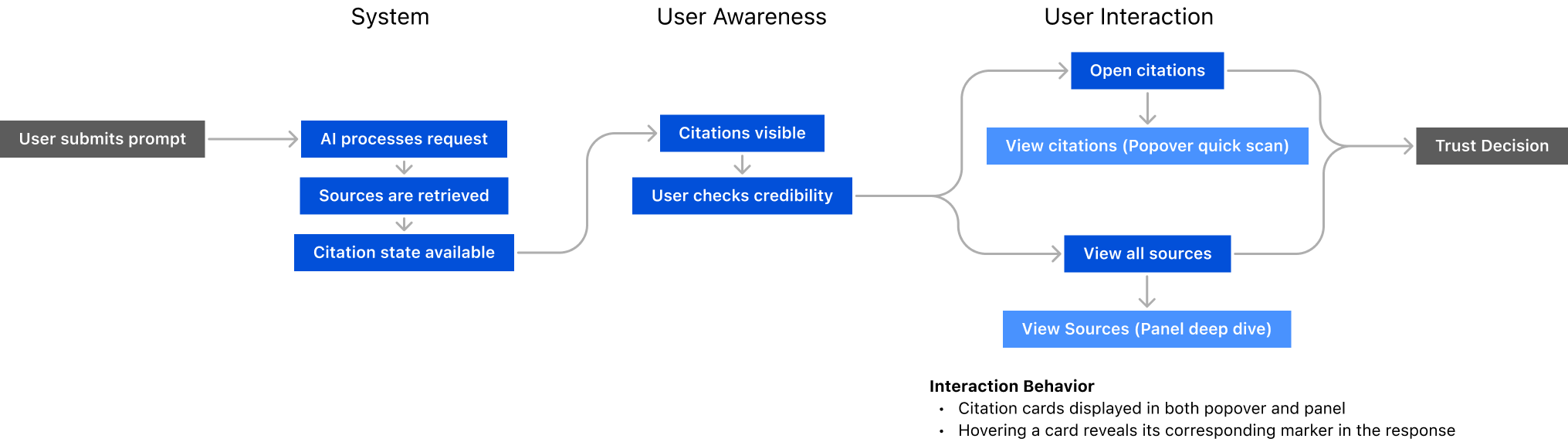
User Flow: progressive trust verification system
Impact
Scaled across 14 product lines, replacing fragmented, one-off implementations
Established a unified approach to how AI responses are handled across products
Made source transparency a core part of AI interaction design
Accelerated delivery of AI experiences through reusable interaction patterns
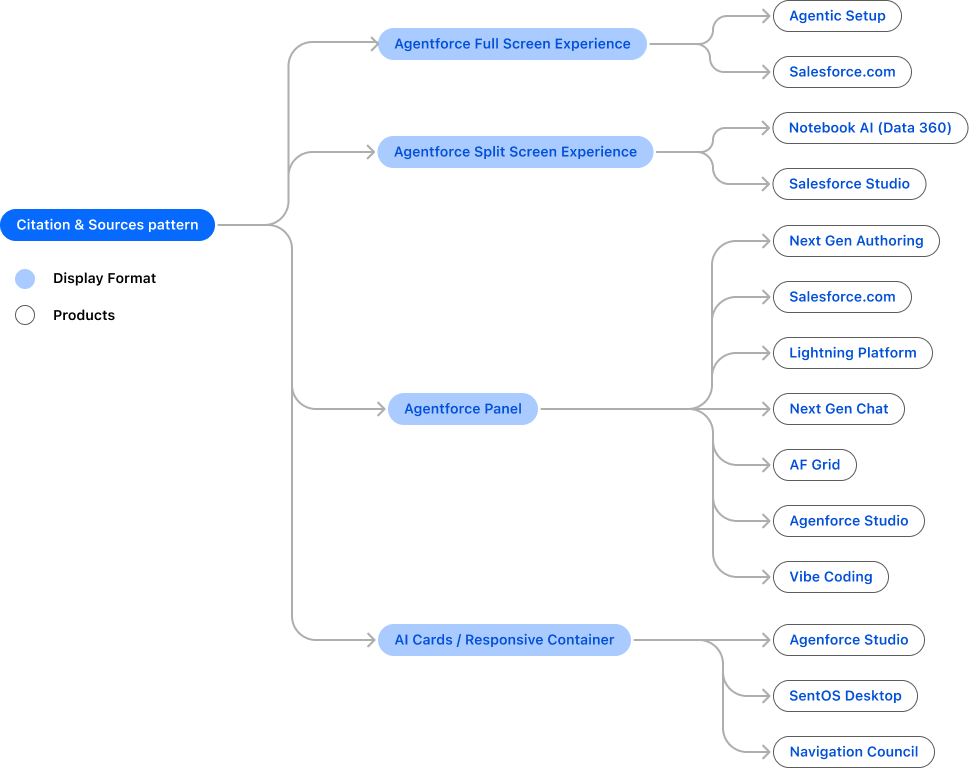
Design
Interaction
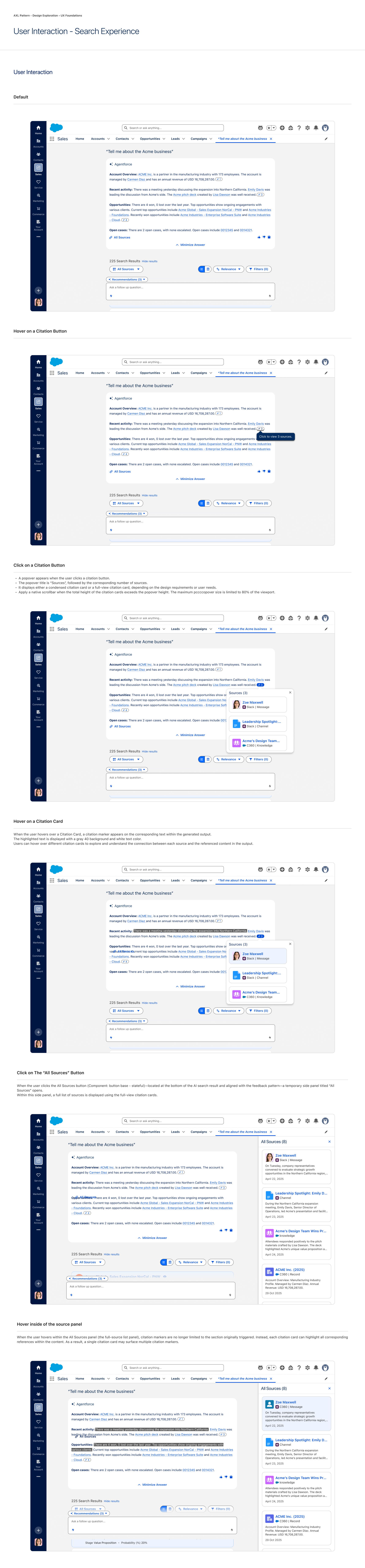
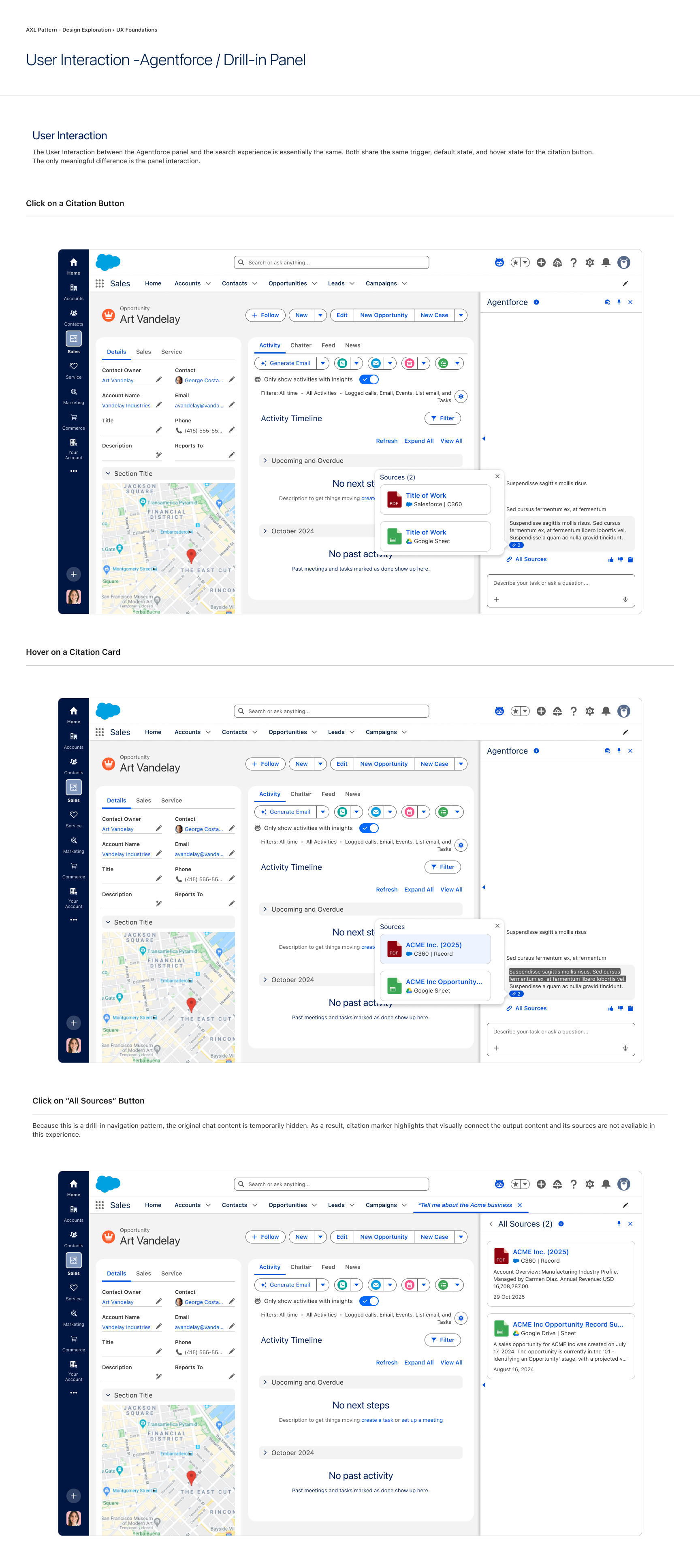
Contextual View (Popover) Triggered by clicking an in-text citation.
Global View (Local Panel) Triggered by the footer/main action button.
Global View (Agentforce Panel) Triggered by the footer/main action button.
AI Search Experience
Agentforce Panel Experience
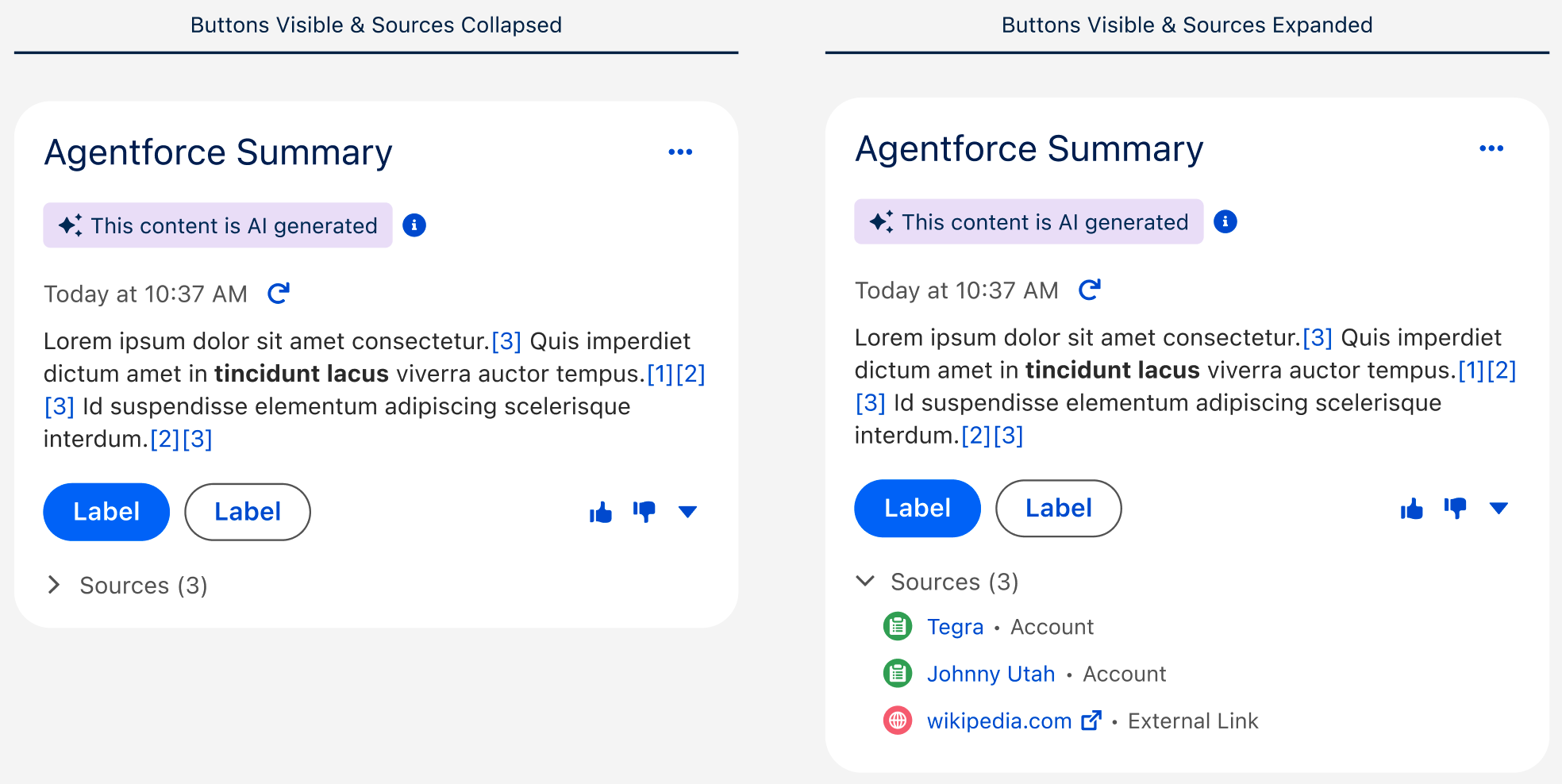
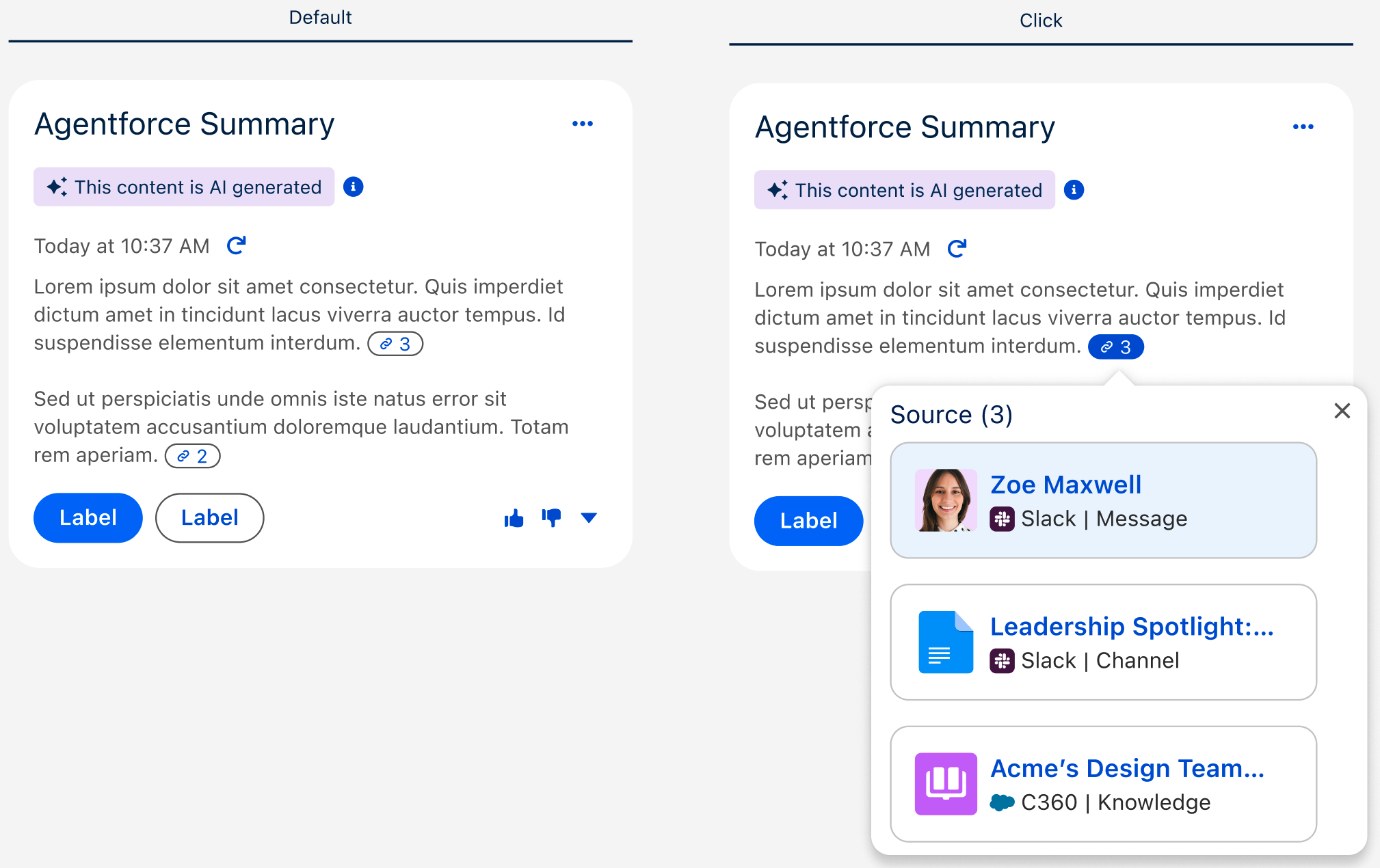
Before and after (AI Card)
The new design improves readability by removing inline citation disruption and shifting source access to a popover. This also eliminates layout shifts—keeping the AI card height stable and preventing content from being pushed down on interaction.
Before
After